Orangeburg Pipe in Phoenix: What It Is, Where It's Found, and What To Do About It
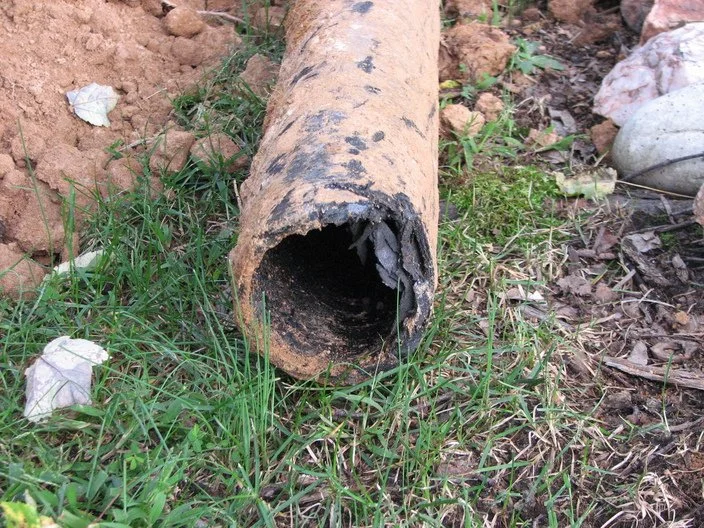
When homeowners in older Phoenix neighborhoods get a sewer camera inspection for the first time, some of them hear a phrase they've never encountered: Orangeburg pipe. The technician points to the footage and describes something that looks warped, oval, and fibrous, nothing like the round PVC pipe most people picture when they think of plumbing.
Orangeburg pipe is a problem specific to a particular era of Phoenix construction, and understanding what it is helps you understand why it fails and what your repair options actually are.
What Orangeburg Pipe Is
Orangeburg pipe is made of compressed wood pulp fibers and pitch, layered and formed into a pipe shape. It was manufactured primarily in Orangeburg, New York, which is how it got the name most people use and it was used widely across the United States as a sewer pipe material from the late 1930s through the early 1970s.
It became common for a straightforward reason: World War II created material shortages that made traditional cast iron and clay pipe less available and more expensive. Orangeburg pipe was cheap to produce, lightweight, and easy to install. It wasn't designed to be a permanent solution. It was a wartime and post-war workaround.
The problem is that it was installed as if it were permanent. Millions of homes across the country had Orangeburg pipe laid as their primary sewer lateral during the post-war housing boom, and many of those pipes are still in the ground today including in Phoenix.
Where Orangeburg Pipe Is Found in Phoenix
Not all Phoenix homes have Orangeburg pipe. It's concentrated in properties built during the period when Orangeburg was in wide use: roughly 1945 through 1972. After that, PVC began to dominate residential sewer construction, and Orangeburg largely disappeared from new installations.
In the Phoenix Valley, Orangeburg pipe is most commonly found in:
Old Town Scottsdale and South Scottsdale (85250, 85251, 85257), one of the densest concentrations of post-war housing in the Valley
Central Phoenix neighborhoods including Encanto, Willo Historic District, and Midtown
Tempe's oldest neighborhoods near ASU, including Maple-Ash, which has homes dating to the early 1900s through the 1960s
Downtown Glendale and the Catlin Court historic district
Original Sun City properties (many built from 1960 onward, though Sun City more commonly has clay pipe)
If your home was built between 1945 and 1972 in any of these areas, a camera inspection will tell you definitively what pipe material you have.
What Orangeburg Pipe Looks Like on Camera
Orangeburg is visually distinct from every other residential sewer pipe material. On camera, it typically shows:
An oval or irregular cross-section instead of a round one. When Orangeburg absorbs moisture over decades, it softens and deforms under the weight of the soil above it. A pipe that was round when installed may now be egg-shaped or significantly flattened. This deformation restricts flow and creates the low spots that catch debris.
A fibrous, rough interior surface. Unlike the smooth interior of PVC or the rough-but-regular surface of older clay and cast iron, Orangeburg's compressed wood pulp fibers become visible as the pipe deteriorates. The interior wall looks almost like cardboard that has been wet repeatedly.
Visible layers or delamination. As Orangeburg breaks down, the layers of compressed material can separate, creating rough ridges and protrusions inside the pipe that catch debris and accelerate blockage.
Collapsed sections. In advanced deterioration, Orangeburg can collapse partially or fully, leaving the camera with nowhere to go.
What Happens to Orangeburg Pipe Over Time
Orangeburg was never rated for the decades of service it's been asked to provide. Its failure mode is slow but inevitable.
Moisture absorption. Orangeburg absorbs water from the soil surrounding it and from the waste water flowing through it. This softening process begins immediately after installation and accelerates over time.
Deformation under load. As the pipe softens, the weight of the soil above it causes it to deform. Round becomes oval, oval becomes nearly flat. Deformed pipe creates reduced flow capacity and low spots that accumulate debris and contribute to chronic backups.
Scale and debris accumulation. Phoenix's hard water deposits mineral scale inside all pipe types, but Orangeburg's rough and increasingly irregular interior surface accumulates scale faster than smooth pipe materials. Combined with the shape deformation, this creates flow restrictions that cause recurring clogs.
Complete collapse. In the final stages of deterioration, Orangeburg loses enough structural integrity that it collapses under soil pressure. At this point there's no flow path at all and the failure is acute.
The timeline for this progression depends on soil conditions, moisture levels, and the quality of the original installation. Some Orangeburg pipe in Phoenix has lasted 60 or 70 years in reasonable condition. Other installations have reached complete collapse at 40 years. The camera inspection tells you where your specific pipe is in this progression.
Can Orangeburg Pipe Be Lined?
This is the most common question homeowners with Orangeburg pipe ask. The honest answer is: sometimes, but less often than other pipe materials.
CIPP lining requires a pipe that still has enough structural form to support the liner during curing. If the pipe is still mostly round or oval but not severely deformed; a CIPP liner can sometimes be inserted, inflated, and cured inside the Orangeburg, creating a new structural pipe inside the failing one. The liner doesn't care about the Orangeburg's condition because it's bonding to the pipe walls and then curing to be self-supporting.
The problem is that Orangeburg deforms unevenly. A CIPP liner inserted into a significantly oval pipe will cure in an oval shape, which reduces its effective diameter compared to a properly round liner. And if the Orangeburg has deformed severely in some sections while remaining relatively round in others, the liner may not seat consistently along the full run.
In most cases where Orangeburg has deteriorated significantly, pipe bursting is the better answer. Pipe bursting is specifically suited to Orangeburg because it doesn't need the existing pipe to be structurally intact; it fractures the old pipe outward and pulls new HDPE pipe into place. The Orangeburg is destroyed in the process, which is exactly what you want.
The camera inspection and a professional assessment determines which approach applies to your specific pipe. Some Orangeburg gets lined successfully. More gets replaced with pipe bursting. Very little of it gets traditional excavation because the disruption and cost aren't justified when pipe bursting accomplishes the same result with two access points instead of an open trench.
What Repair Options Exist for Orangeburg Pipe
Pipe Bursting. The primary repair method for most Orangeburg in Phoenix. A steel bursting head is pulled through the Orangeburg pipe, fracturing it outward into the surrounding soil while simultaneously pulling new HDPE pipe into place. New pipe is rated for 50 to 100 years of service life and carries a lifetime warranty from Phoenix Trenchless. Two access points, no open trench.
CIPP Pipe Lining. Appropriate for Orangeburg sections that are still relatively round and haven't reached severe structural deterioration. A resin-saturated liner is inserted and cured inside the Orangeburg, creating a new seamless pipe inside the old one. 50+ year rated liner.
Targeted excavation. In cases where a very specific section of Orangeburg has failed in a way that neither lining nor pipe bursting can address, usually involving a physically collapsed section that prevents any tool access, limited excavation may be needed at that spot. This is relatively uncommon when trenchless options are evaluated first.
What Owning a Home With Orangeburg Pipe Means
If your camera inspection reveals Orangeburg pipe, the key information to get is how far along the deterioration is.
Early-stage Orangeburg (some oval deformation, intact interior surface, no collapse) may function adequately for years before requiring intervention. Monitor it with periodic camera inspections and repair proactively when the deterioration reaches the point where lining or bursting is needed.
Mid-stage Orangeburg (significant oval deformation, rough fibrous interior, debris accumulation, slow drains) should be addressed in the near term. This is the range where lining may still be an option or pipe bursting is clearly the right call.
Late-stage Orangeburg (severe deformation, visible delamination, near-collapse or active collapse) is an active problem that needs immediate attention. Full pipe replacement via pipe bursting is almost certainly the recommendation.
If you're buying a home with Orangeburg pipe, the camera footage and an estimate for repair or replacement gives you concrete negotiating leverage before closing. Knowing the Orangeburg is there is infinitely better than discovering it after the purchase.
Frequently Asked Questions
How do I know if my Phoenix home has Orangeburg pipe?
A sewer camera inspection is the only reliable way to confirm it. Orangeburg is visually distinct from other pipe materials and impossible to confuse once you've seen it on camera. If your home was built between 1945 and 1972 in an older Phoenix neighborhood, particularly in Scottsdale, central Phoenix, or Tempe, Orangeburg is a real possibility.
How long does Orangeburg pipe last?
Orangeburg was not designed for the service life it's been asked to provide. Some installations have lasted 60 to 70 years in relatively stable condition. Others have deteriorated to near-collapse at 40 years. The timeline depends on soil conditions, moisture levels, and the consistency of the original installation. The camera tells you where your specific pipe is in the deterioration cycle.
Is Orangeburg pipe dangerous?
A failed or failing Orangeburg pipe that allows sewage to leach into the surrounding soil is a health and environmental concern. A deformed Orangeburg pipe causing chronic backups is a plumbing inconvenience. Neither is acutely dangerous in the way a burst gas line would be, but both are problems that warrant attention rather than indefinite deferral.
Can I sell a house with Orangeburg pipe?
Yes, but it typically needs to be disclosed in real estate transactions. Orangeburg pipe is a known defect in Arizona real estate law, and a seller who is aware of it is obligated to disclose it. Buyers who discover Orangeburg during inspections routinely request repair credits or price adjustments. Sellers who repair or replace the pipe before listing remove that negotiating point.
What's the difference between Orangeburg pipe and clay pipe?
Both were used in roughly the same era, but they fail differently. Clay pipe is rigid and durable when intact, but brittle after 50+ years, it cracks and joint-separates. Orangeburg is soft and flexible, and its failure mode is deformation and collapse rather than cracking. Both materials show up in pre-1970s Phoenix homes depending on the neighborhood and the builder.
How much does it cost to replace Orangeburg pipe in Phoenix?
Cost depends on the length of the affected line, accessibility, and the repair method. Pipe bursting is typically significantly less expensive than traditional excavation because it avoids the caliche excavation and surface restoration costs that drive up Phoenix excavation jobs. Phoenix Trenchless provides upfront pricing after a free camera inspection and will beat any written competitor estimate.