

UV-Cured Pipe Repair in Phoenix, AZ
UV-cured pipe repair is an advanced trenchless sewer lining method that uses ultraviolet light to harden a resin liner inside your damaged pipe in minutes, not hours. No trenching. No extended downtime. It's the fastest structural pipe repair we offer, and it's built to last 50 years or more.
Speed matters when your sewer line is out of commission. Every hour your system is offline is another hour of disruption to your household. That's one reason UV-cured pipe repair has become one of the most in-demand trenchless methods in the industry, and why Phoenix Trenchless offers it as part of our full-service lineup.
UV-cured pipe lining uses the same core concept as traditional CIPP lining (a resin-saturated liner installed inside your existing pipe) but replaces the older curing methods with ultraviolet light. The result: faster cure time, a stronger finished product, and a more reliable process from start to finish.


How UV-Cured Pipe Lining Works
Here's how the full UV-cured pipe repair process works, step by step:
UV Curing vs. Traditional Curing Methods
Here's how UV-cured lining compares to older CIPP curing approaches:
| Curing Method | Typical Cure Time | Temperature Sensitive? | Best For |
|---|---|---|---|
| Ambient cure | 4–10 hours | Yes | Budget jobs, mild conditions |
| Steam cure | 1–3 hours | Yes | Mid-range projects |
| UV cure | 10–15 minutes | No | Fast turnaround, extreme heat climates |
Don’t just listen to us
Hear from our clients
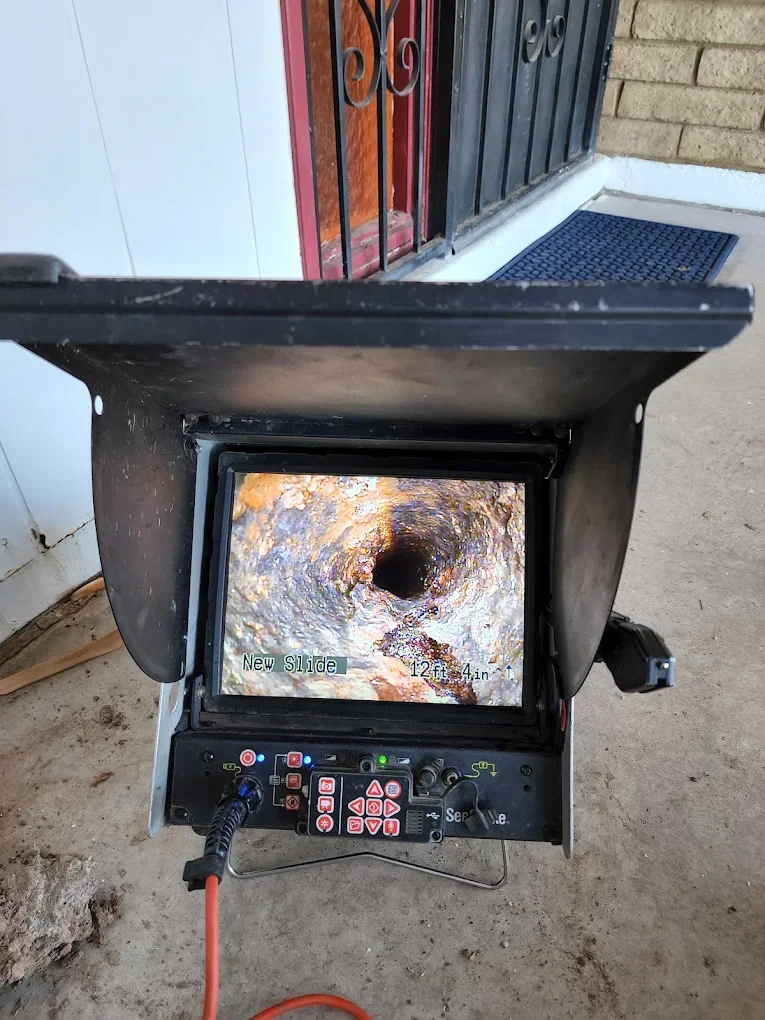
Before
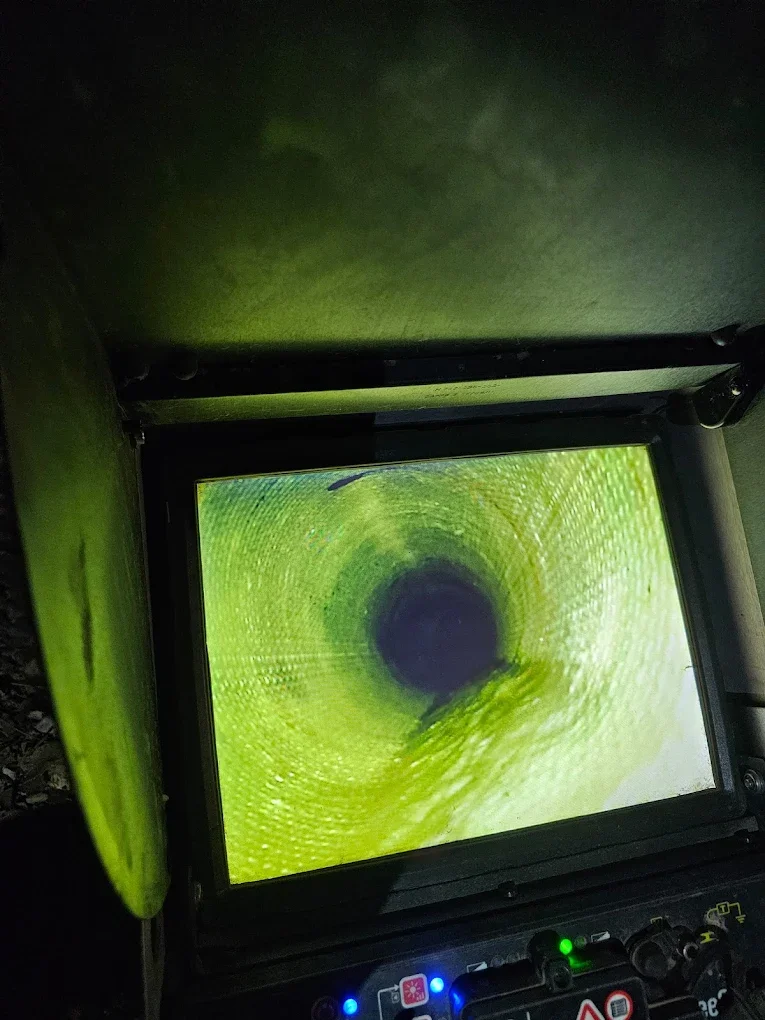
After
Why UV Curing Is a Step Forward in Phoenix, AZ
✔ Faster cure times.
Your sewer line is back in service in minutes, not hours. Total project time from start to finish is significantly shorter than ambient or steam methods.
✔ More consistent results.
Heat-based curing is affected by ambient temperature, pipe material, and moisture levels. UV curing eliminates most of those variables because the process is driven by light, not heat. More uniform, more predictable.
✔ Stronger finished product.
UV-cured liners that use fiberglass-reinforced resin can achieve wall strength comparable to a new pipe while using thinner liner material. Less reduction in your pipe's internal diameter means better flow capacity.
✔ No weather dependency.
In Phoenix, where summer temperatures regularly exceed 110 degrees, heat-sensitive curing processes can be unpredictable. UV curing isn't affected by ambient temperature, a major advantage in Arizona's extreme climate.
When UV-Cured Lining Makes Sense
UV-cured pipe repair is a great fit for:
Homeowners who need a structural sewer line repair completed quickly with minimal downtime
Cracked pipes, root-damaged joints, corroded pipe walls, and offset joints
Pipe diameters commonly found in residential systems (typically 4 to 8 inches)
Most pipe materials, including cast iron, clay, PVC, and Orangeburg
Rental properties and multi-family homes where extended sewer downtime isn't an option
Homeowners who can't be without sewer service for an extended period
UV-Cured Lining and Phoenix's Climate
Phoenix's desert conditions actually give UV-cured lining a double advantage:
Heat resistance.
Traditional steam-cured liners require careful temperature monitoring to avoid under-curing or over-curing the resin. When it's 115 degrees outside and the ground temperature around the pipe is elevated, those margins get tight. UV-cured liners sidestep this entirely; curing is triggered by light, not temperature, so results are consistent whether it's January or July.
Low humidity.
Moisture can interfere with some curing processes, but Phoenix's dry environment means the pipe interior dries quickly after cleaning, creating ideal conditions for resin adhesion.
What UV-Cured Lining Won't Fix
Like other pipe lining methods, UV-cured repair requires an existing pipe structure to bond to. It won't work for:
Fully collapsed pipes
Severe structural failure along a significant portion of the run
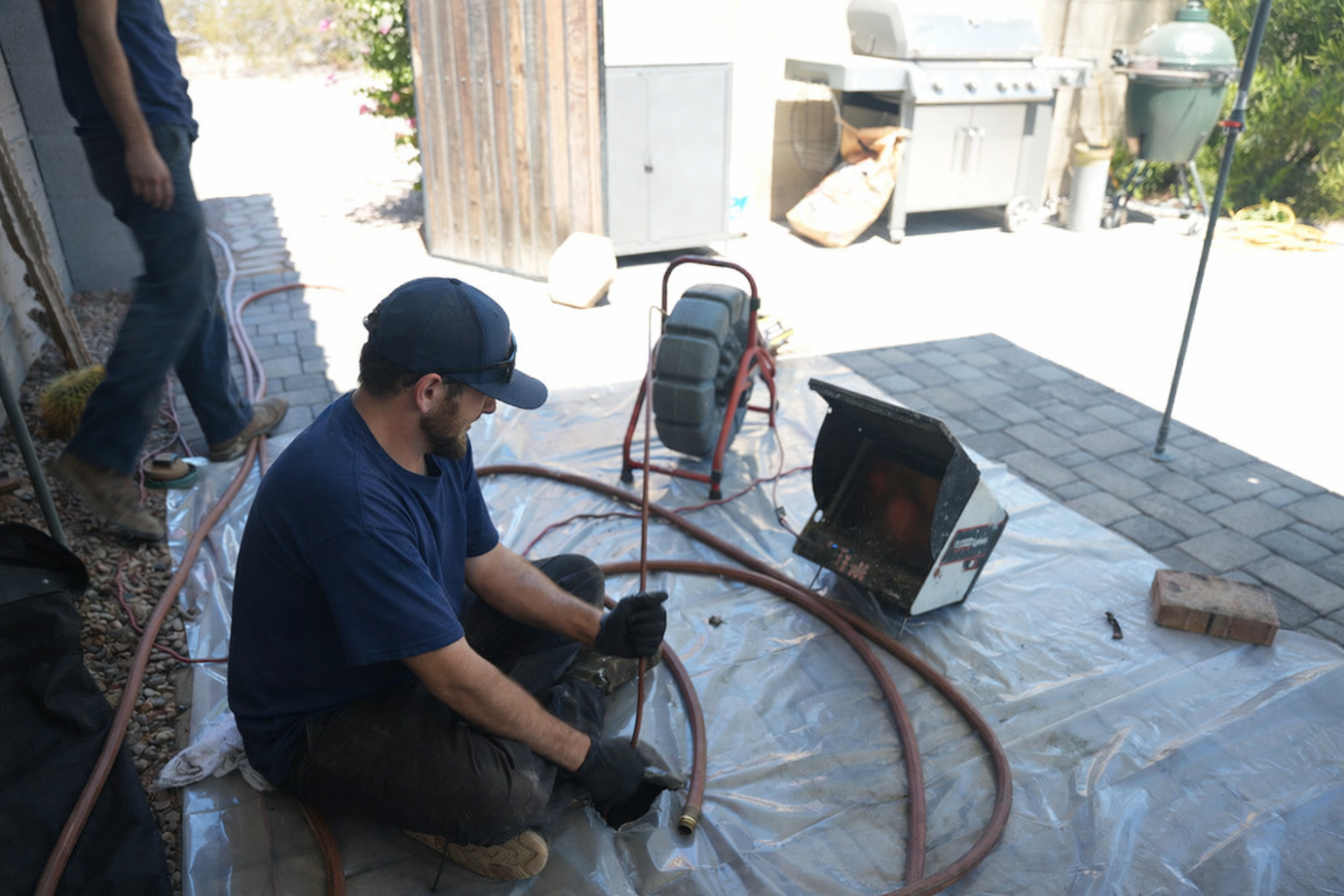
For those situations, pipe bursting (which replaces the old pipe entirely) is likely the better option. We'll know exactly what you need after the camera inspection. And we'll show you the footage so you can see what we see.
Start with a Free Camera Inspection
Don't commit to a repair until you know what you're dealing with. Book a free camera inspection with Phoenix Trenchless. We'll show you the inside of your sewer line, explain what we find, and give you an honest recommendation. If you don't need us, we'll tell you.
No Dig. No Mess. No Stress.
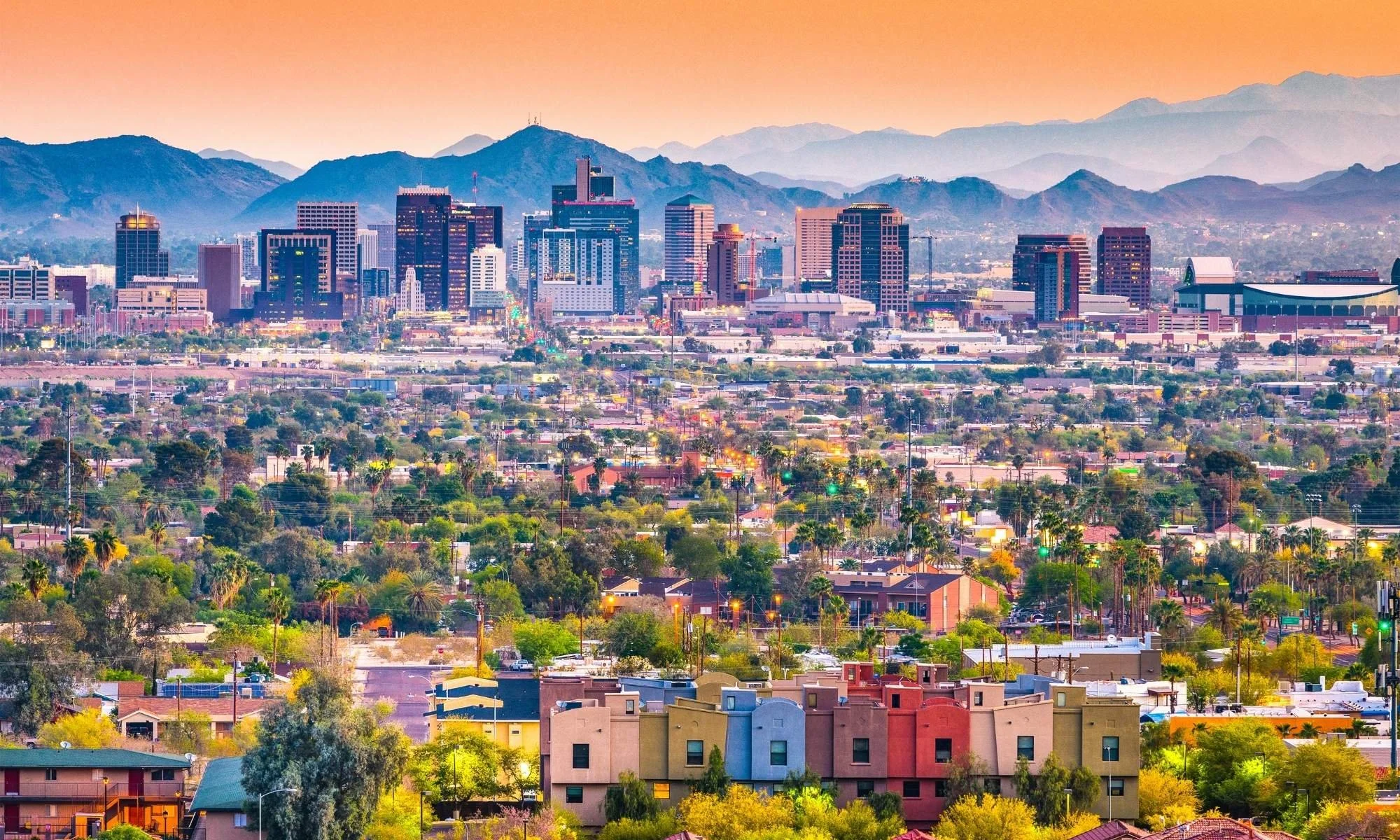
Proudly serving homeowners and businesses Valleywide
Phoenix, Tempe, Mesa, Scottsdale, Glendale, Chandler, Gilbert, Peoria, Avondale, Surprise, Sun City, and more.
Frequently Asked Questions About UV-Cured Pipe Repair
-
UV-cured pipe lining is an advanced form of CIPP (cured-in-place pipe) repair that uses ultraviolet light instead of heat or steam to harden a resin-saturated liner inside your existing sewer pipe. A fiberglass liner pre-impregnated with a UV-activated resin is inserted into the damaged pipe, positioned, and then cured by pulling a UV light train through the line. The resin hardens in minutes, forming a smooth, jointless, structurally reinforced new pipe inside the old one, all without digging.
-
UV curing is significantly faster than traditional CIPP curing methods. Ambient-cure liners take 4 to 10 hours to fully harden. Steam-cure liners typically take 1 to 3 hours. UV-cured liners can harden in as little as 10 to 15 minutes, depending on the length of the run. This means your sewer line is back in service the same day, often within a few hours of the crew arriving.
-
UV-cured liners that use fiberglass-reinforced resin can achieve wall strength comparable to or exceeding a new pipe, often while using thinner liner material than traditional felt-based liners. The UV curing process also produces more consistent results because it's not affected by ambient temperature, moisture, or the timing variables that can cause under-curing or over-curing with heat-based methods. The result is a more uniform, predictable repair across the full length of the liner.
-
Phoenix's extreme climate gives UV-cured lining two specific advantages over traditional curing methods:
Heat resistance. When summer temperatures exceed 110 degrees and ground temperatures around the pipe are elevated, steam-cure and hot-water-cure methods have tighter margins for error. UV curing is triggered by light, not temperature, so results are consistent year-round.
Low humidity. Moisture can interfere with some resin curing processes. Phoenix's dry desert environment means pipes dry quickly after cleaning, creating ideal bonding conditions for UV-activated resins.
Traditional curing methods still work in Phoenix, but UV curing removes the climate variables from the equation entirely.
-
UV-cured pipe repair is effective for:
Cracked or fractured pipes from ground movement or age
Root intrusion at joints
Corroded pipe walls (cast iron, clay)
Offset or separated joints
Pipes with minor bellying that still maintain adequate slope
It works on pipe diameters commonly found in residential systems (typically 4 to 8 inches) and is compatible with cast iron, clay, PVC, and Orangeburg pipe materials.
-
Yes. UV-cured liners are generally considered safer and cleaner than traditional heat-cured methods. There's no steam venting, no boiler exhaust, and no high-temperature equipment on site. Many UV resins are engineered to be low-VOC and low-odor compared to older styrene-heavy resins used in steam-cured systems. The shorter cure time also means any minor odor dissipates quickly. You may notice a faint plastic or resin smell during the process, but it typically clears within minutes of completion.
-
A properly installed UV-cured liner has an expected service life of 50 years or more under normal residential conditions. The fiberglass-reinforced resin is corrosion-resistant, root-resistant, and jointless, eliminating the most common failure points in traditional sewer pipes. At Phoenix Trenchless, every UV-cured pipe repair is backed by our lifetime transferable warranty.
-
Like all pipe lining methods, UV-cured repair requires an existing pipe structure to bond to. It's not a fit for:
Fully collapsed pipes where there's no pipe wall remaining
Severe structural failure along a large portion of the run
Pipes that need to be upsized for increased flow capacity
In those situations, pipe bursting, which replaces the old pipe entirely with new HDPE, is the better option. Phoenix Trenchless determines which method is right during your free camera inspection so you get an honest recommendation before any work begins.
-
Cost varies based on the pipe's length, diameter, condition, and access points. Because UV curing reduces labor time and eliminates the extended curing windows of traditional methods, it can be competitively priced despite using advanced materials. Phoenix Trenchless provides a transparent estimate after your free camera inspection. We also offer financing and will beat any written competitor estimate.