

CIPP Pipe Lining in Phoenix, AZ
CIPP pipe lining, short for cured-in-place pipe lining, is a trenchless sewer repair method that fixes your damaged sewer line. No trenches. No heavy machinery parked in your driveway. And in most cases, the whole job is done in a single day.
If you've been told your sewer line needs replacing, you might be picturing a torn-up yard, heavy equipment, and a repair bill that makes you sweat. That used to be how it worked. Not anymore.
At Phoenix Trenchless, CIPP lining is one of our most-used repair methods. We do it in-house with our own crews -- no subcontractors, no handoffs. And we start every project the same way: with a free camera inspection, so you know exactly what's going on before a single dollar changes hands.


How CIPP Pipe Lining Works
The process for CIPP pipe lining is straightforward. Here's how it breaks down:
The result is a jointless, corrosion-resistant pipe that restores full flow and structural integrity.
Why Phoenix Homeowners and Businesses Choose CIPP Lining
There are a few reasons CIPP has become the go-to repair method for residential sewer lines across the Valley:
-
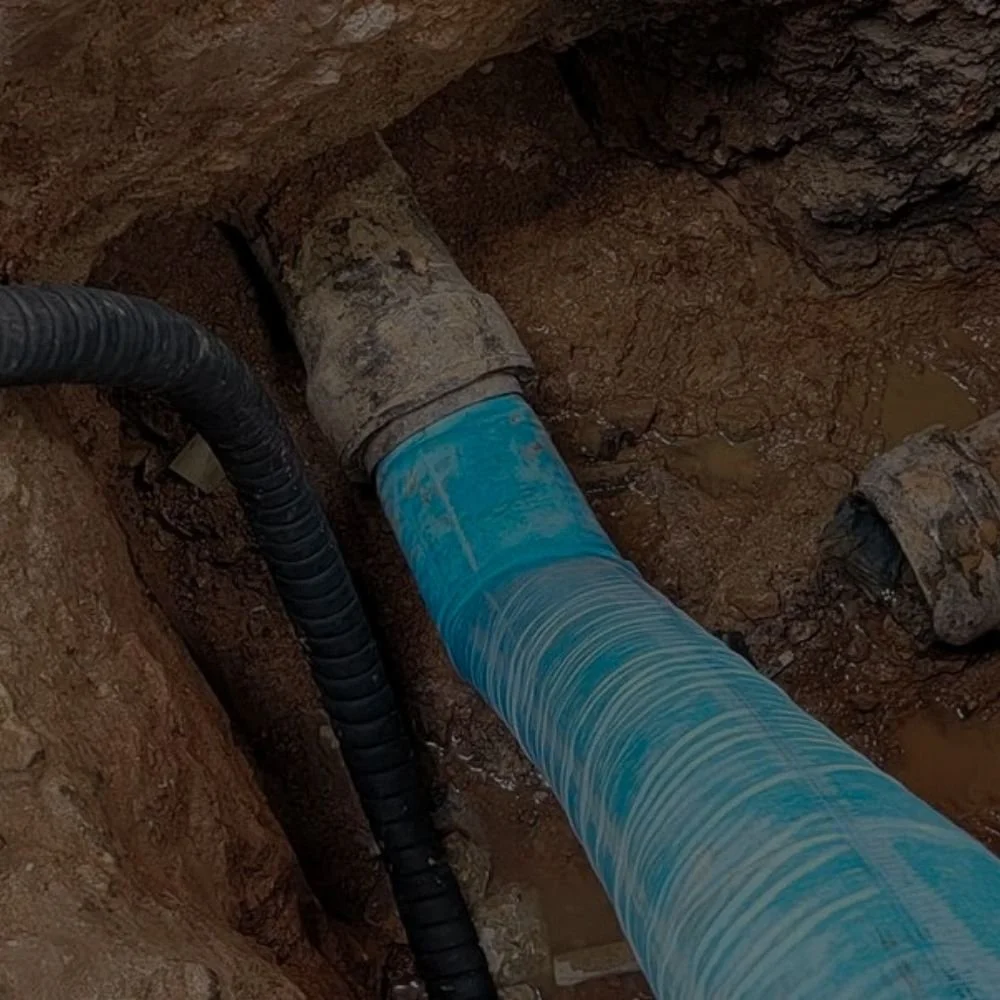
Traditional sewer replacement means trenching through your yard, potentially cutting into driveways, walkways, pool decking, or landscaping. CIPP lining avoids all of that. We access the pipe through one or two small points -- often a cleanout or a single excavation spot.
-
Most residential CIPP pipe lining jobs are finished in one day. Some are done in a few hours. Compare that to traditional dig-and-replace work, which can take several days.
-
A properly installed CIPP liner has an expected service life of 50 years or more, per manufacturer specifications and third-party testing under ASTM F1216. The cured resin resists corrosion, root intrusion, and chemical degradation.
-
Cast iron, clay, Orangeburg, or PVC, CIPP lining can typically be installed inside the existing pipe. This is especially relevant in Phoenix, where older homes in Encanto, Arcadia, and the historic districts still have original clay or cast iron lines
Don’t just listen to us
Hear from our clients
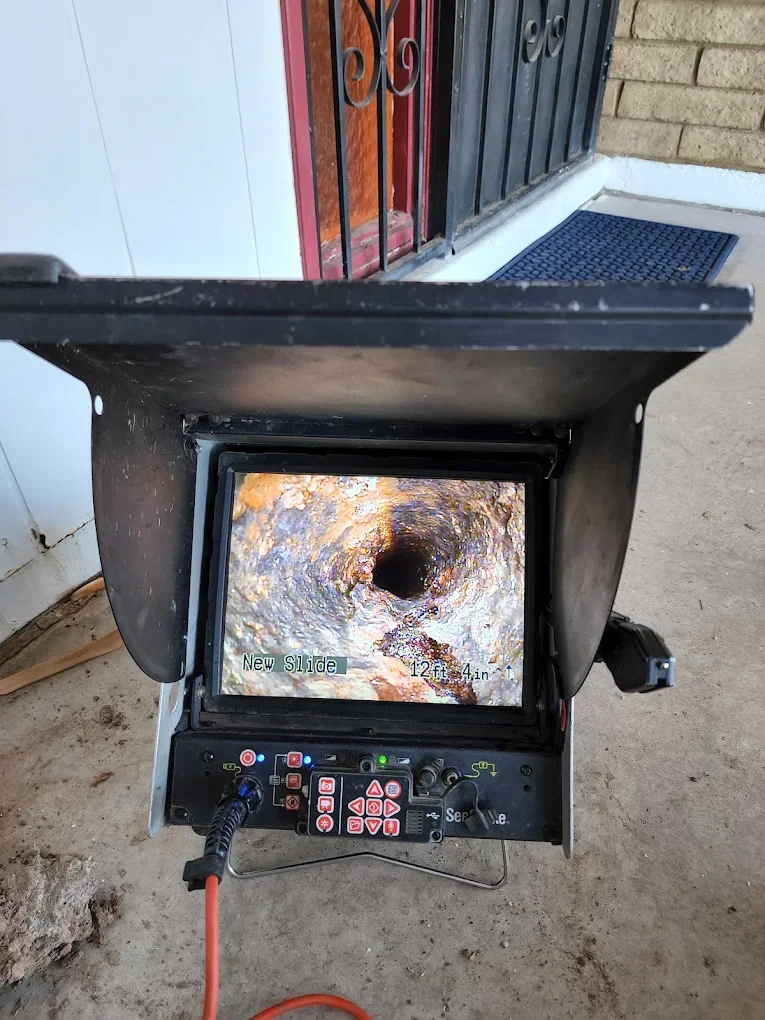
Before
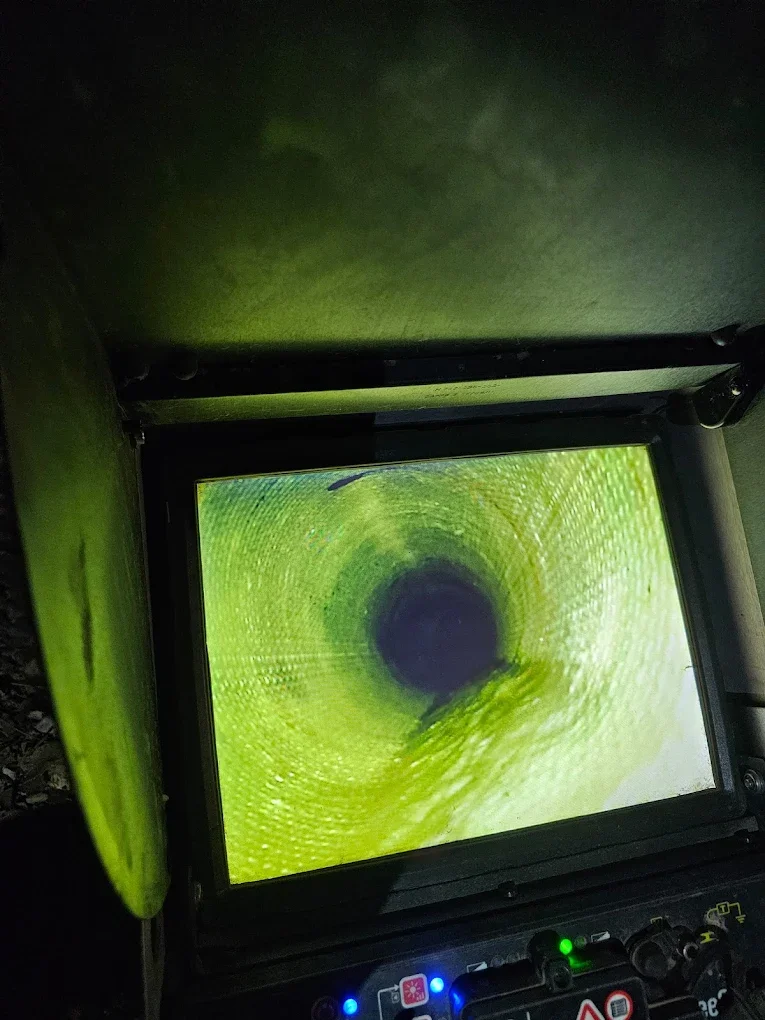
After
What CIPP Lining Fixes
CIPP sewer repair is effective for a wide range of sewer line problems, including:
✔ Cracked or fractured pipes
✔ Root intrusion at joints
✔ Corrosion and scale buildup
✔ Offset or separated pipe joints
✔ Minor bellies or sags where the pipe has shifted
✔ Aging pipes showing early signs of deterioration (preventive lining)
There are situations where CIPP may not be the right fit. If your pipe has fully collapsed, there's nothing for the liner to bond to, and pipe bursting or spot excavation may be a better call. That's exactly why we start with the camera, so we recommend the right method for your situation, not just the one that's easiest for us.
CIPP Lining for Phoenix's Unique Conditions
Phoenix's desert environment creates specific challenges for underground sewer lines:
Caliche soil. Many parts of the Valley have caliche, a calcium-carbonate layer that's extremely hard and expensive to excavate through. This makes traditional dig-and-replace repair significantly more costly here than in cities with softer soil.
Monsoon wet-dry cycling. Soil expands during monsoon rains and contracts during dry periods, shifting pipes and weakening joints over time. CIPP lining addresses this by creating a continuous, jointless interior surface that moves with the pipe instead of cracking at connection points.
Cost advantage. For Phoenix homeowners, CIPP pipe lining often costs less than traditional replacement, not just because the lining itself is more efficient, but also because it avoids caliche excavation, landscape restoration, driveway repair, and the extended labor that comes with all of it.



What It Costs
We won't throw out a generic price range because every sewer line is different. The factors that affect cost include:
Length and diameter of the pipe
Number and location of access points
Condition of the existing pipe
Number of connecting drain lines
What we will say: we are a trenchless-only company. This is all we do, every day. That specialization means we're efficient, and we pass those savings along. We also offer 0% financing for 18 months for homeowners who qualify, so cost doesn't have to be a barrier.
If you've already received a quote from another company, bring it with you. We'll beat any written competitor estimate by $2,500. That's not a gimmick, it's how confident we are in our pricing.
Our Warranty
Every CIPP lining job we complete comes with a 20-year warranty. It's one more reason to get this done now rather than waiting.

No Dig. No Mess. No Stress.
Proudly serving homeowners and businesses Valleywide
Phoenix, Tempe, Mesa, Scottsdale, Glendale, Chandler, Gilbert, Peoria, Avondale, Surprise, Sun City, and more.
Frequently Asked Questions About CIPP Pipe Lining in Phoenix
-
CIPP stands for cured-in-place pipe. It's a trenchless sewer repair method where a flexible, resin-saturated liner is inserted into your existing damaged pipe and cured in place to form a smooth, seamless new pipe inside the old one. The process doesn't require digging trenches or removing the original pipe. It's used to repair cracked, corroded, root-damaged, and deteriorating sewer lines in residential and commercial properties.
-
A properly installed CIPP liner has an expected service life of 50 years or more, based on manufacturer specifications and third-party testing under ASTM F1216. The cured liner is jointless, corrosion-resistant, and root-resistant, eliminating the most common failure points in traditional sewer pipes. At Phoenix Trenchless, every CIPP lining job is backed by our lifetime transferable warranty.
-
Most residential CIPP pipe lining projects are completed in a single day. The process includes a camera inspection, pipe cleaning, liner insertion, curing, and a final post-repair camera verification. Depending on the curing method used, ambient, steam, or UV, actual cure time can range from as little as 10 minutes (UV) to several hours (ambient). You may be asked to limit water use for a portion of the day while curing takes place.
-
CIPP lining works on most common residential sewer pipe materials, including:
Cast iron: common in Phoenix homes built before the 1970s
Clay: found in many older Phoenix neighborhoods like Encanto and Arcadia
PVC: standard in homes built from the 1980s onward
Orangeburg: a fiber-based pipe prone to collapse, found in some mid-century homes
Concrete
The key requirement is that the existing pipe must still be structurally intact enough to support the liner. If the pipe has fully collapsed, pipe bursting is typically the better option.
-
CIPP sewer repair addresses a wide range of sewer line problems, including cracked or fractured pipes, root intrusion at joints, internal corrosion and scale buildup, offset or separated joints, and minor bellying or sagging. It's also an effective preventive measure for aging pipes that haven't failed yet but are showing early signs of deterioration.
-
The liner does slightly reduce the internal diameter of the pipe, but the reduction is minimal, typically a few millimeters. In practice, most homeowners see improved flow after lining because the cured interior is smooth and uniform, eliminating the rough, corroded, and scaled surfaces that cause friction and slow drainage in older pipes.
-
In most cases, yes. CIPP lining avoids the major cost drivers of traditional dig-and-replace repair: excavation through Phoenix's caliche soil, landscape and driveway restoration, extended labor time, and heavy equipment. When you factor in those restoration costs, CIPP pipe lining is typically 30 to 50% less expensive than traditional replacement for comparable residential sewer lines. Phoenix Trenchless also offers financing and will beat any written competitor estimate.
-
CIPP lining is not a fit for every situation. It won't work on fully collapsed pipes (there's nothing for the liner to bond to), pipes with severe bellying that affects drainage slope, or pipes with large sections of missing material. In those cases, pipe bursting or targeted excavation is the better call. That's exactly why Phoenix Trenchless starts every project with a free camera inspection, so we recommend the right method for your pipe's actual condition, not just the easiest or cheapest option.